

Our products

Copper3D PLACTIVE AN1 Sky Blue-2.85mm-750g
December 17, 2020
Prusament ASA Prusa Orange 850g
December 17, 2020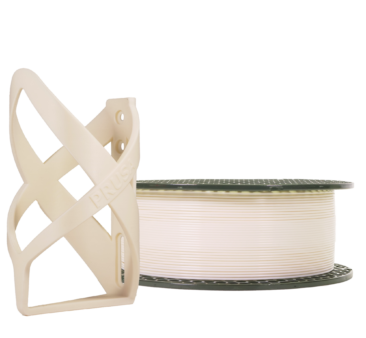
Prusament ASA Natural 850g
44.63€ inc. VAT
Prusament ASA is our own in-house made filament. The whole manufacturing process is closely monitored and tested – we guarantee ±0.03mm precision and highly-consistent colors.
Out of stock
ABOUT ASA
ASA can be considered a true successor to ABS. Compared to ABS, it’s UV stable, it doesn’t suffer from shrinking so badly and the fumes produced are much less noticeable. ASA 3D prints are durable, tough and suitable for a wide range of applications. The solidification temperature is also higher compared to PLA and PETG, which gives objects printed from ASA an excellent temperature resistance – there are no signs of deformation up to temperatures near 93 °C. Thanks to all these properties, ASA is especially suitable to print objects meant for long-time outside use.
However, you can still encounter some issues related to shrinking (warping) of the material – especially when printing larger models. Even with the heatbed set to 110°C, the prints can shrink and warp, causing them to detach from the print bed. However, the effects are much less severe compared to ABS. This issue can be eliminated by printing inside an enclosure or by adding a tall skirt around the object.
ASA printing requires specific conditions for successful results. It’s important to run the prints in a well-ventilated room, because the material releases fumes and substances that could pose a potential health risk. However, when ventilating the room, do not create a draft around the print – this will negatively impact the result.
PRINTING SETUP
Nozzle |
260±5 °C |
Heatbed |
110±5 °C |
BASIC ATTRIBUTES
| + | Great for outside use – UV stable | – | Large models have a tendency to warp |
| + | High temperature resistance | – | Produces odors during printing (less than ABS) |
| + | Detailed prints without a stringing effect | – | Contains styrene |
| + | Can be smoothed with acetone vapors | – | Hygroscopic |
| + | Can be easily sanded / post-processed | ||
| + | High impact and wear resistance | ||
| + | Recyclable |
This ASA is made in-house by Prusa Research.
1.75 mm filament is manufactured with a precision of +- 0.03 mm
Before printing, make sure the surface of heatbed is clean
Technical Data Sheet
Safety Data Sheet
DATA SHEET
| Diameter | 1.75mm |
Related products
-
PrimaSelect™ PLA – 1.75MM – 2.3KG – WHITE
59.40€ inc. VAT -
NinjaFlex Filament – 3mm – 0.75 kg
39.90€ inc. VAT